Dix Park Light Field Landscape Displays
Depth-Embedded Views of Grasslands, Memory, and Public Space
Project Summary
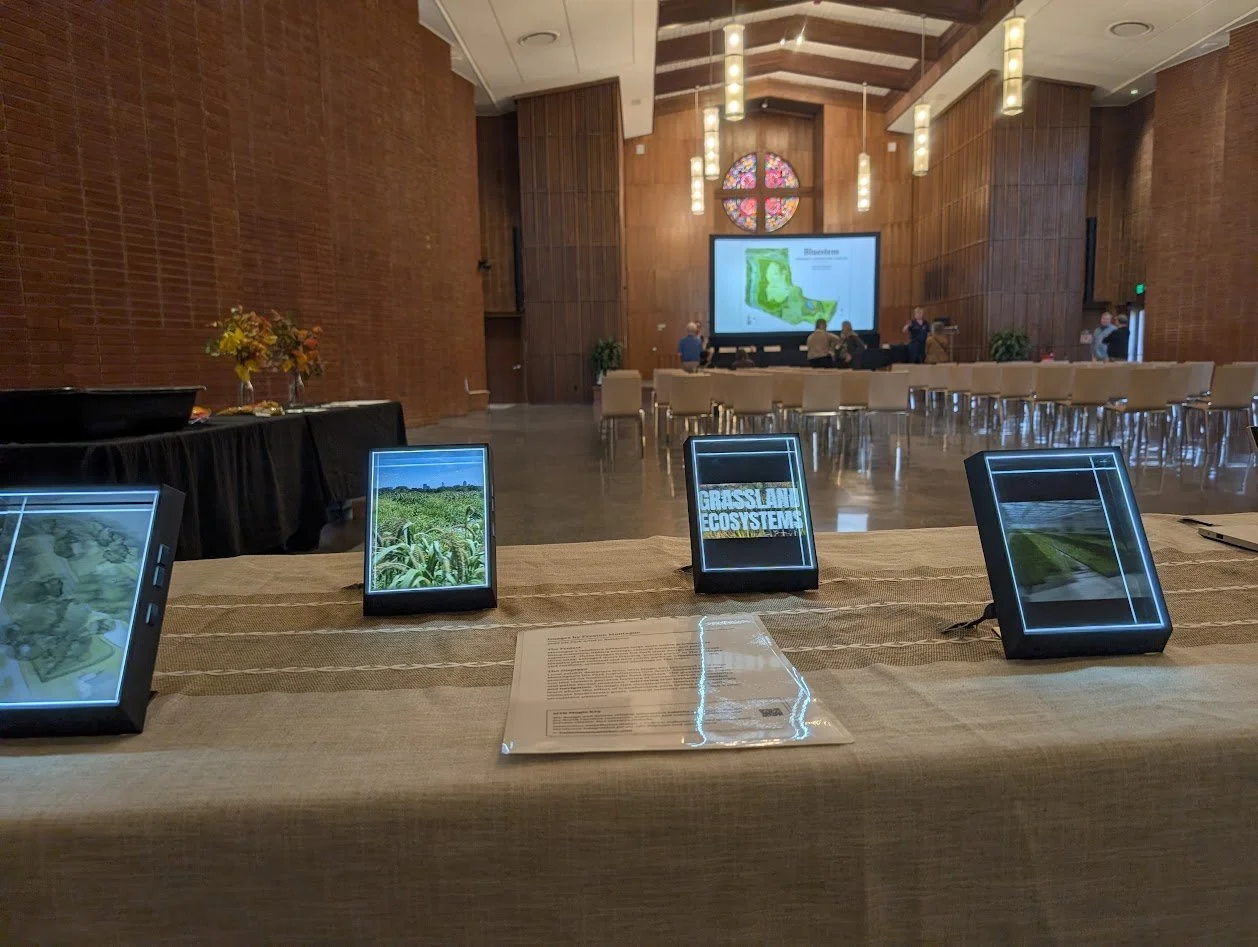
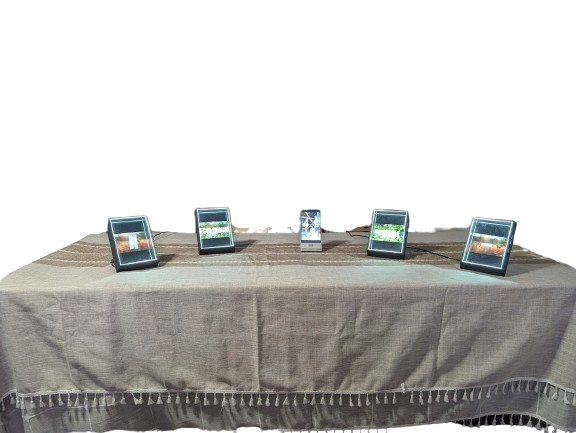
As part of the Common Ground Symposium at Dix Park, MTR Magic Key developed a table of glasses-free light field displays featuring images from 2025 Dix Park Artist in Residence Preston Montague. Residency stills from three project sites were processed into depth-embedded images and presented as hologram-like views that reveal the structure and intent of each landscape intervention.
Visitors could perceive distinct layers of canopy, understory, path, and meadow without wearing 3D glasses. The installation translated complex ecological design decisions and cultural narratives into an intuitive visual experience that could be read at a glance during the symposium.
Context
- Residency Focus: Montague’s residency advances large native grasslands as living sculpture across three Dix Park sites—The Cottages, Grasshopper Hill, and The Grove—linking ecology, cultural memory, and public use.
- The Cottages: Salvaged doors frame “private parks,” evoking the former hospital campus while inviting new forms of gathering and reflection.
- Grasshopper Hill: Invasive removal and new path networks clarify sightlines, circulation, and habitat structure across the hilltop.
- The Grove: Resilient, erosion-tolerant plantings stabilize slopes while supporting long-term biodiversity and public access.
- Symposium Setting: The light field table complemented talks and panel discussions on public health, access to the outdoors, and conservation practice.
Tools
- Source Imagery: High-resolution stills from Montague’s Dix Park installations across the three residency sites.
- Photo Editing: Tonal correction, cropping, and compositing to emphasize key landscape elements such as paths, tree lines, and planted frames.
- Depth Mapping: Custom depth maps and layering workflows to separate canopy, understory, ground plane, and architectural elements.
- Light Field Displays: Lenticular, glasses-free 3D displays calibrated for close-range tabletop viewing.
- Deployment Hardware: Small-form-factor media players and stable power/stand configurations for continuous exhibition during the symposium.
Implementation
- Image Selection: Collaborated with Montague to select stills that clearly communicate design intent, historical memory, and ecological structure at each site.
- Depth-Embedded Compositing: Built per-image depth maps and layer stacks so that doors, paths, tree canopies, and meadow planes resolve at different apparent depths.
- Light Field Formatting: Converted layered scenes into lenticular-ready formats tuned to the specific display pitch and viewing distance of the table hardware.
- Device Provisioning & Management: Prepared media players, loaded content, configured looping playback, and tested for brightness, viewing angle, and durability.
- On-Site Integration: Installed the light field displays as a cohesive table, aligning cable runs, sightlines, and labels with the symposium’s broader exhibition design.
Outcome
- Intuitive Depth Cues: Viewers could read canopy vs. understory, path vs. meadow, and framed vs. open space through parallax rather than technical diagrams.
- Ecology and Memory Made Legible: The displays helped attendees understand the effort behind invasive removal, new path systems, and long-term biodiversity goals at a glance.
- Support for the Residency: Extended Montague’s interpretive toolkit with a media format that matched the experimental, multidisciplinary nature of the residency.
- Platform for Future Work: Demonstrated a repeatable pipeline for turning landscape and planning imagery into light field experiences for parks, museums, and public events.
Note: Images from collections by Preston Montague, 2025 Dix Park Artist in Residence.