Magic Key
Assistant
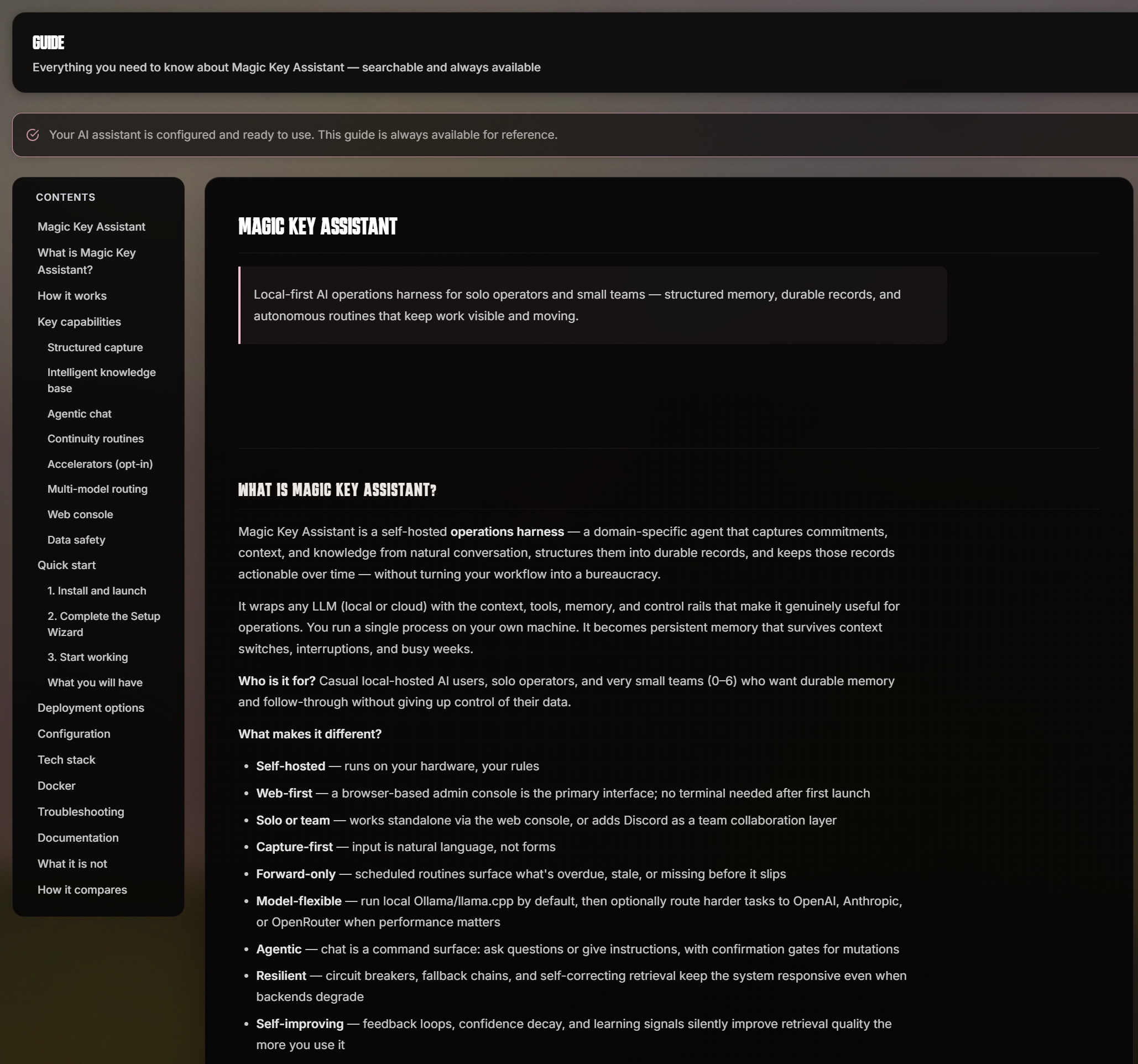
Local-first operations harness for small teams, combining AI-assisted chat, durable records, retrieval, planning, and administrative continuity.
Project Summary
Magic Key Assistant is a local-first operational continuity platform for micro-teams that need AI support without surrendering their working memory to a cloud SaaS product. The system turns everyday conversation, project notes, research, and follow-up into durable operational records, including actions, decisions, blockers, source links, knowledge gaps, and recurring work streams. Its upcoming release combines multi-backend LLM routing, self-correcting retrieval, formal state machines, trust controls, and a FastAPI admin dashboard into a practical assistant for teams that need continuity, not another chat window.
Core Capabilities
Technical Implementation
The release version uses 27 sequential database migrations, a service container for lazy-instantiated shared services, request tracing for per-stage timing and model usage, circuit breakers for service resilience, encrypted backup support, and hardware-aware setup that can recommend local model configurations based on CPU, RAM, disk, and GPU capacity.
System Design
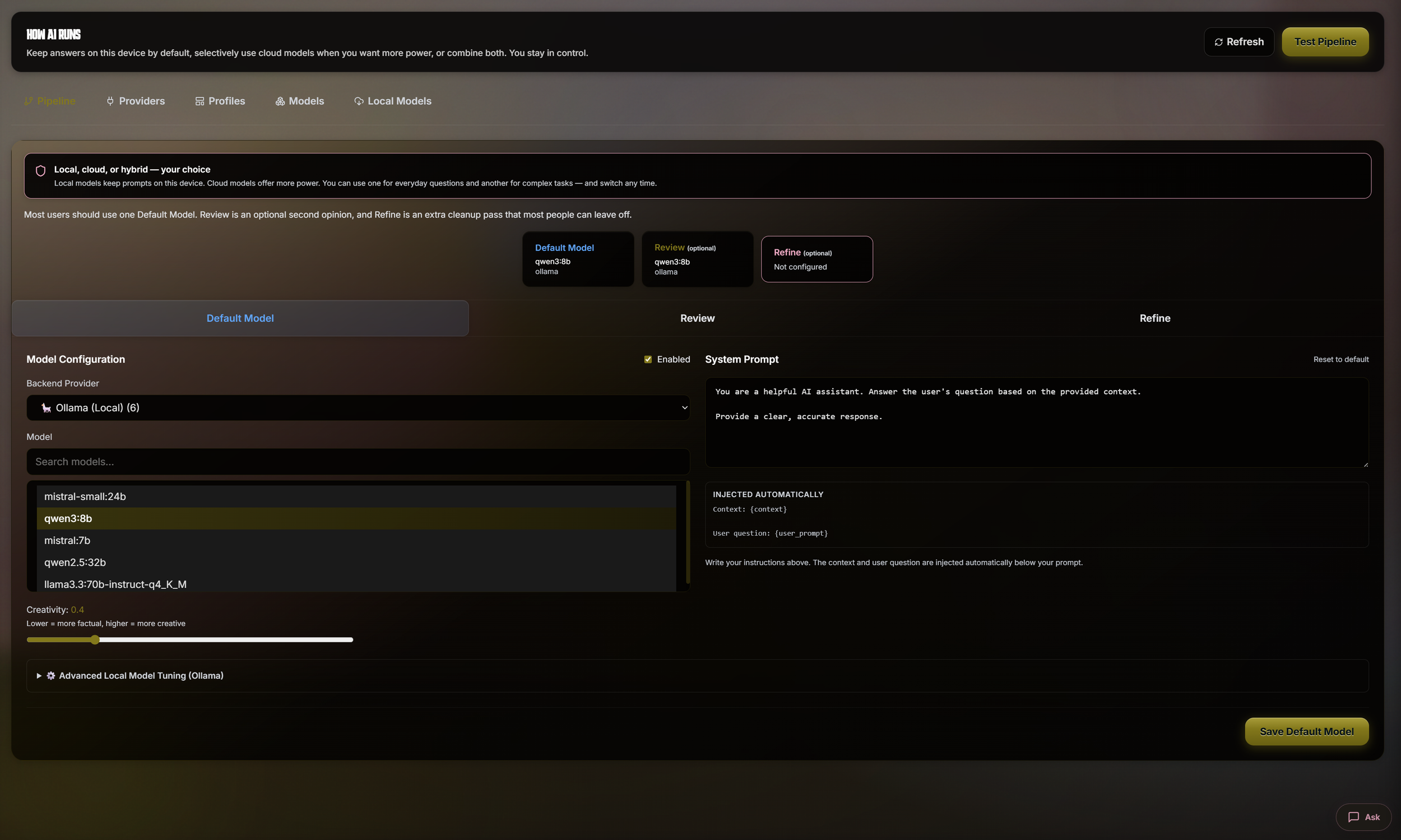
- Application-layer AI: Designed to consume multiple LLM backends rather than depend on a single hosted provider or proprietary workflow.
- Prompt-compatible tool use: Uses a backend-agnostic XML-style tool-calling protocol, allowing agentic workflows across local and hosted models.
- Symbolic safeguards: Uses formal state transitions, causal tracing, planning rules, review queues, and confirmation gates around operational work.
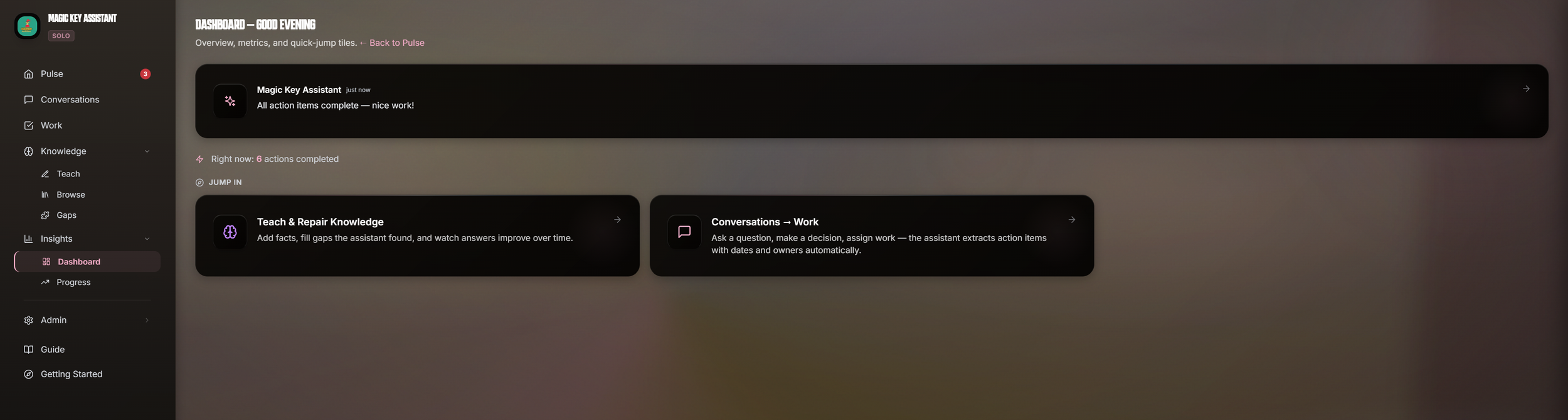
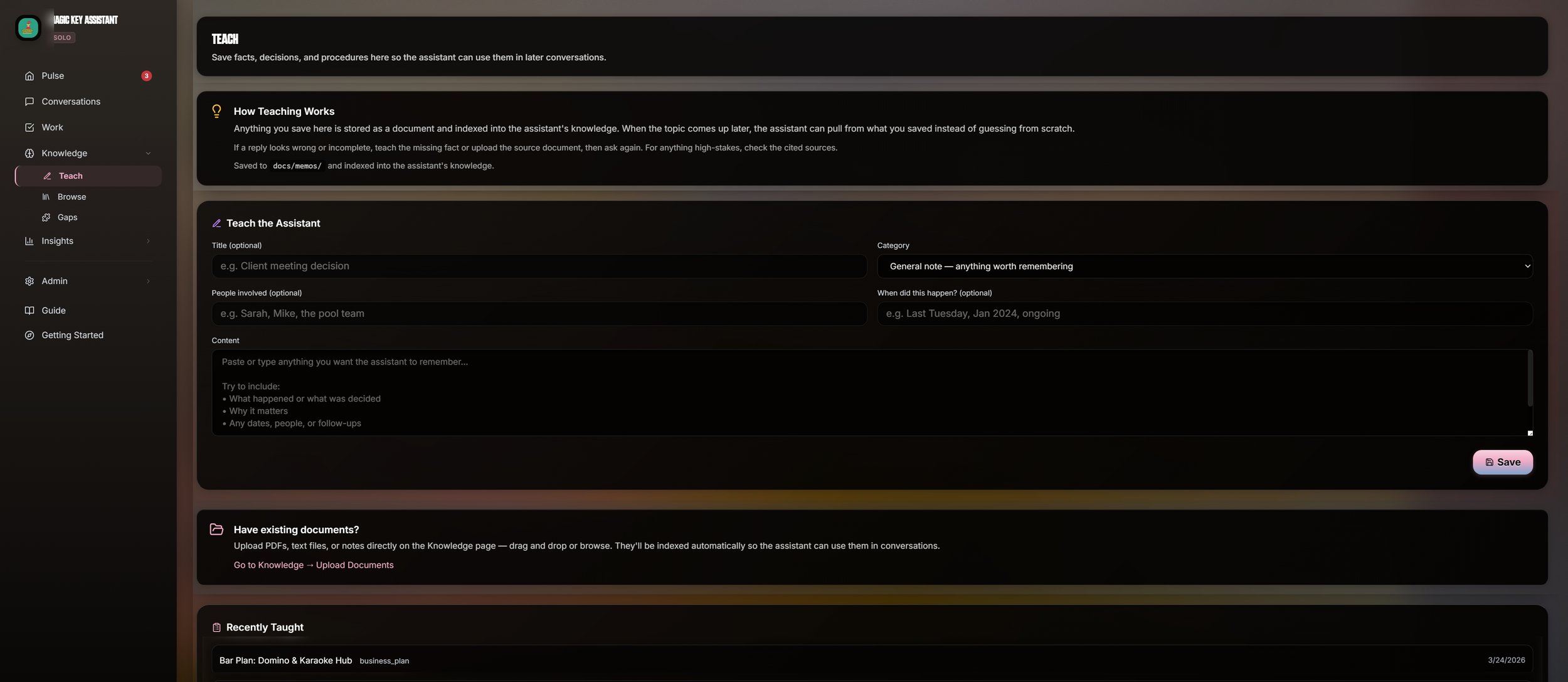
- Admin-first deployment: Provides a web dashboard for system health, model routing, review queues, retrieval logs, continuity views, settings, activity, and knowledge management.
Impact & Outcomes
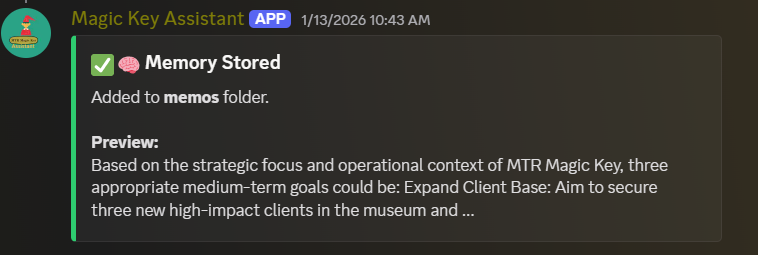
- Reduced operational drift: Recurring work, unresolved decisions, stale blockers, and overdue actions are captured and surfaced instead of disappearing into chat history.
- Durable institutional memory: Conversations, source links, artifacts, records, retrieval feedback, and knowledge gaps become a searchable operating layer for the team.
- Local-first AI adoption: Teams can use local or hosted models according to cost, privacy, speed, and quality needs without rebuilding the workflow around each backend.
- Practical autonomy: The system nudges, routes, reviews, traces, and escalates work while preserving human control over consequential changes.