Dueling Dinosaurs
Voting Interactive
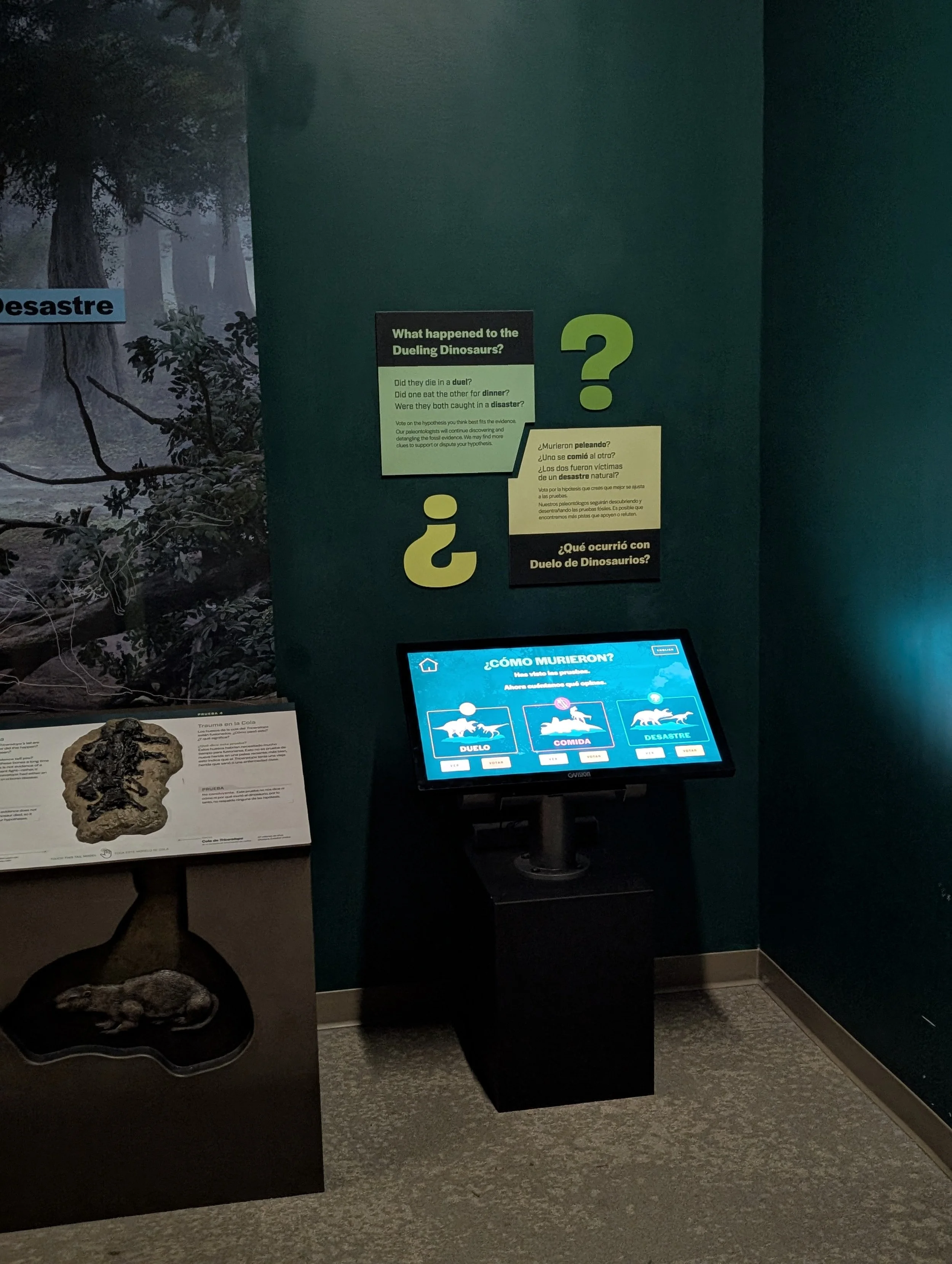
A bilingual touchscreen experience inviting museum visitors to weigh the evidence, choose a hypothesis, and compare their vote with the public response.
What happened to the Dueling Dinosaurs?
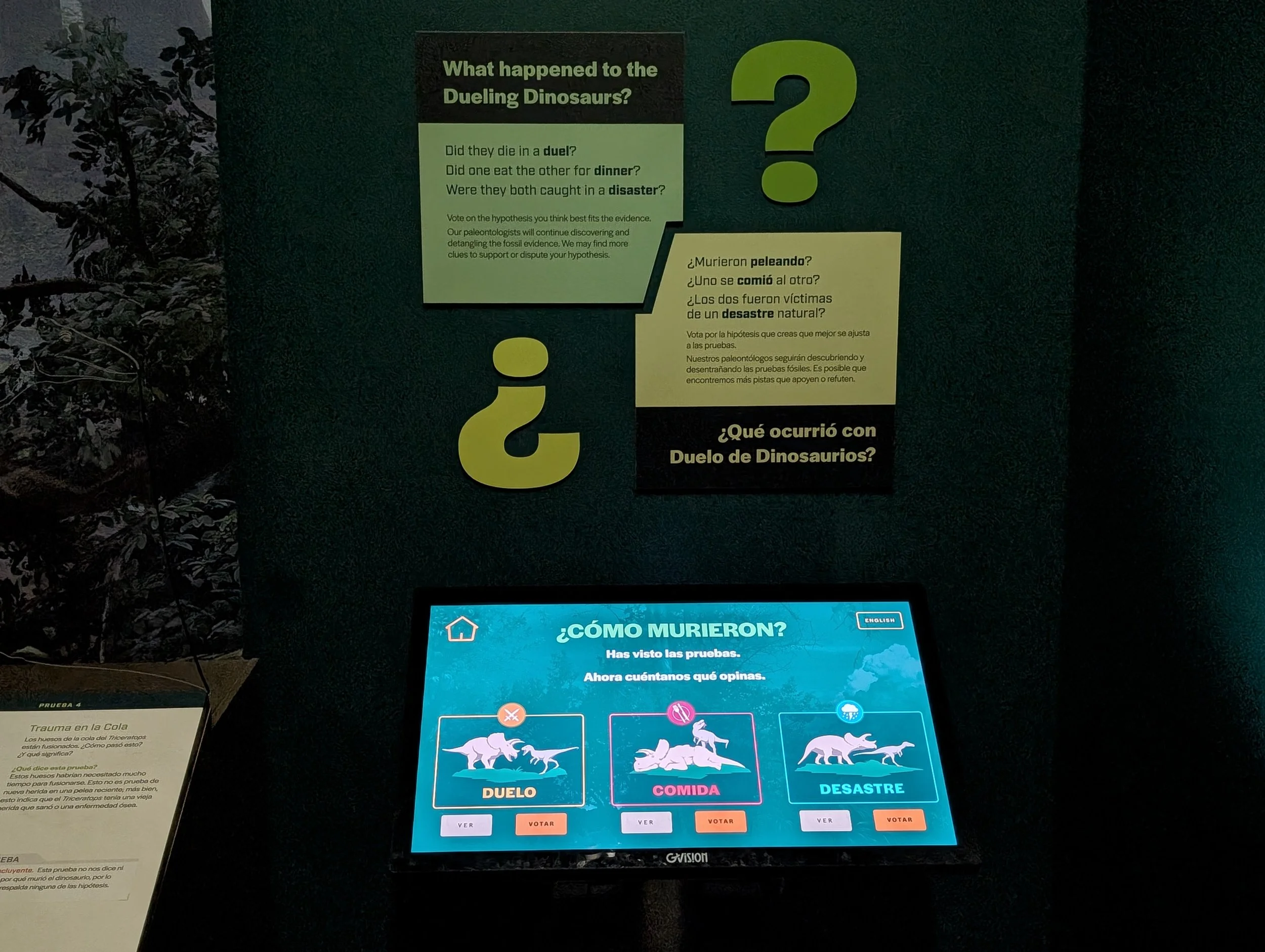
The Dueling Dinosaurs Voting Interactive asks visitors to consider three possible explanations for one of the museum's central paleontological questions: did the dinosaurs die in a duel, did one eat the other for dinner, or were both animals caught in a disaster?
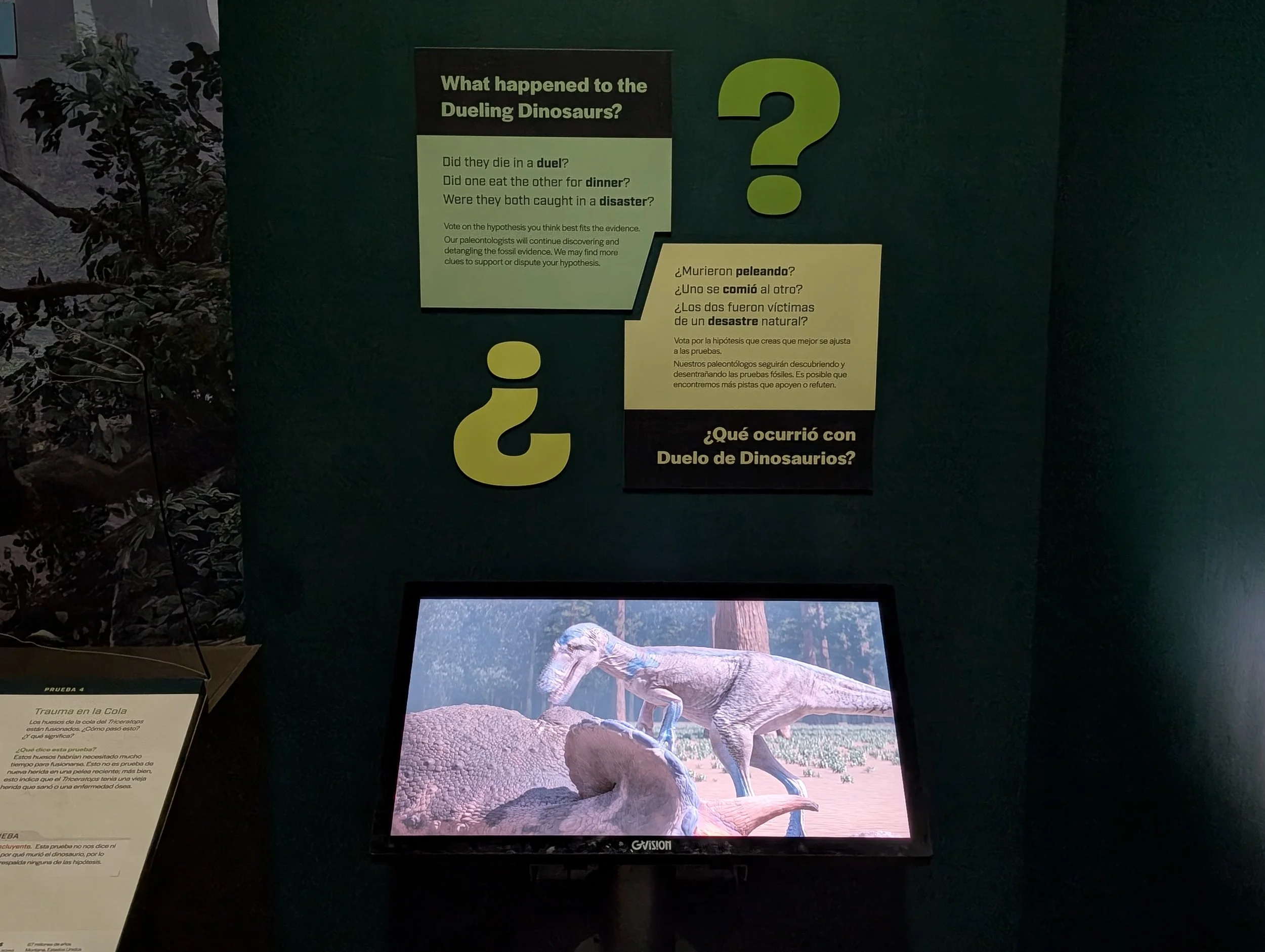
MTR Magic Key developed a custom kiosk application that pairs short interpretive videos with a public voting experience. Visitors can review each hypothesis, cast a vote, and immediately see how their response compares with thousands of other museum visitors.
The Voting Interactive
This exhibit turns scientific uncertainty into an active visitor decision. Rather than presenting a single fixed answer, the kiosk reinforces the museum's interpretive message: paleontologists continue to uncover evidence, refine hypotheses, and revise conclusions as new fossil data emerges.
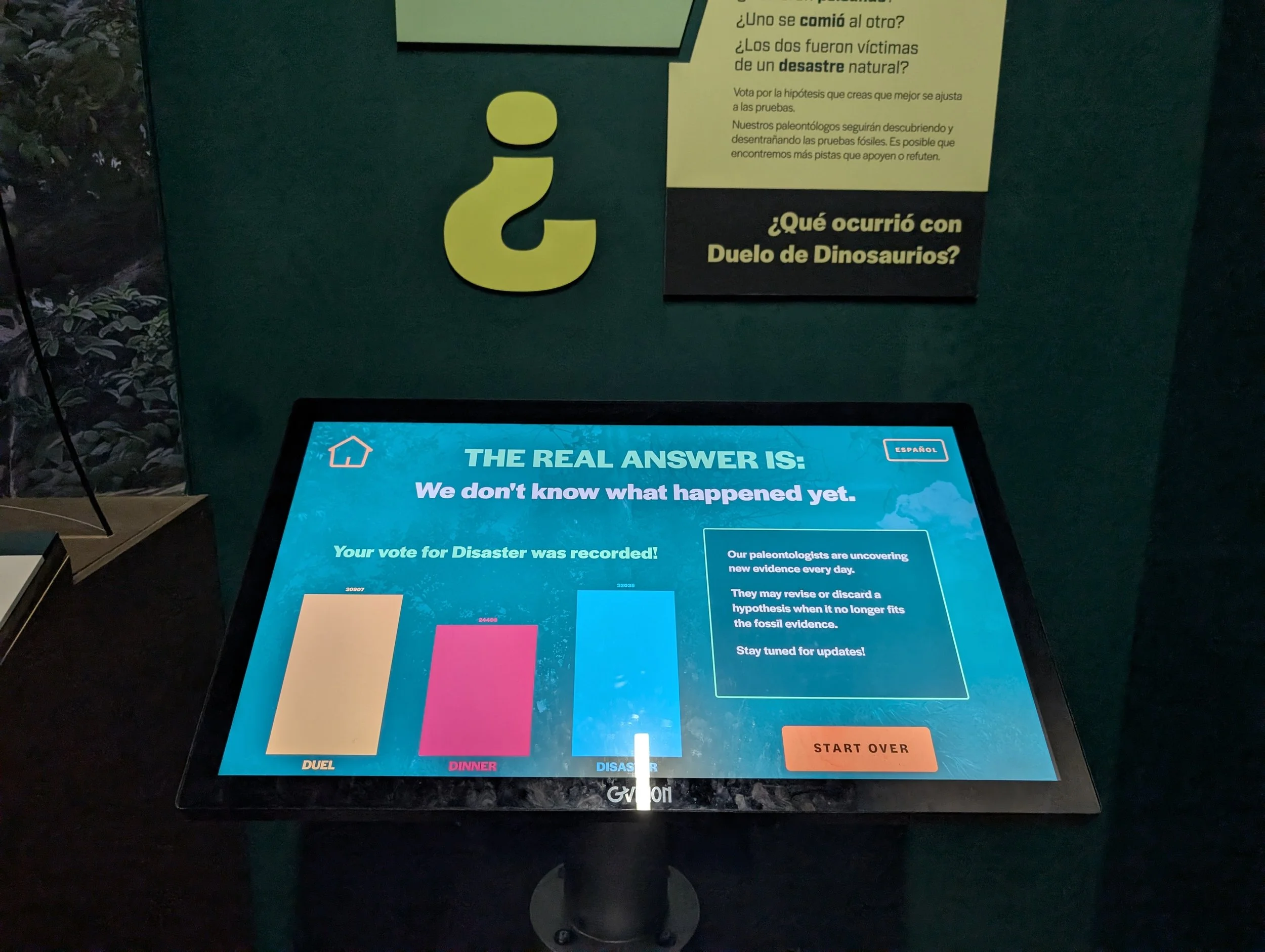
The final results screen confirms each visitor's vote, visualizes the aggregate public response, and closes with the central scientific answer: we do not know what happened yet. The experience supports both English and Spanish audiences throughout the full interaction.
Technology Stack
React
Jotai
Video.js / MP4
Chart.js
REST API
Windows Touchscreen Kiosk
Key Features
Visitors choose between Duel, Dinner, and Disaster after reviewing the exhibit's competing hypotheses, turning scientific interpretation into an accessible public interaction.
Each voting option includes an interpretive video segment that helps visitors understand the possible story behind the fossils before making a selection.
After voting, visitors see their choice confirmed and displayed alongside aggregate response data, creating a lightweight sense of participation in the public life of the exhibit.
English and Spanish interface modes allow visitors to move through the full experience, from hypothesis review to vote confirmation, in their preferred language.
The kiosk was refined for unattended public use with touch-friendly navigation, home recovery, consistent inactivity timing, and a controlled start-over flow for high-traffic visitor cycles.
Client: North Carolina Museum of Natural Sciences